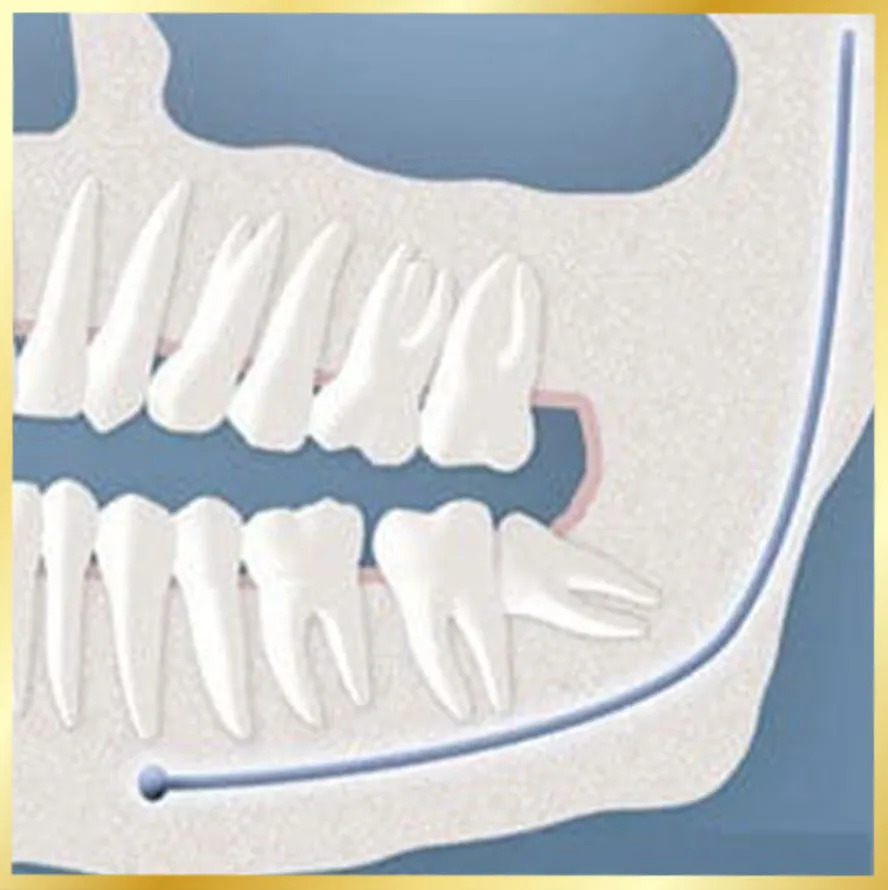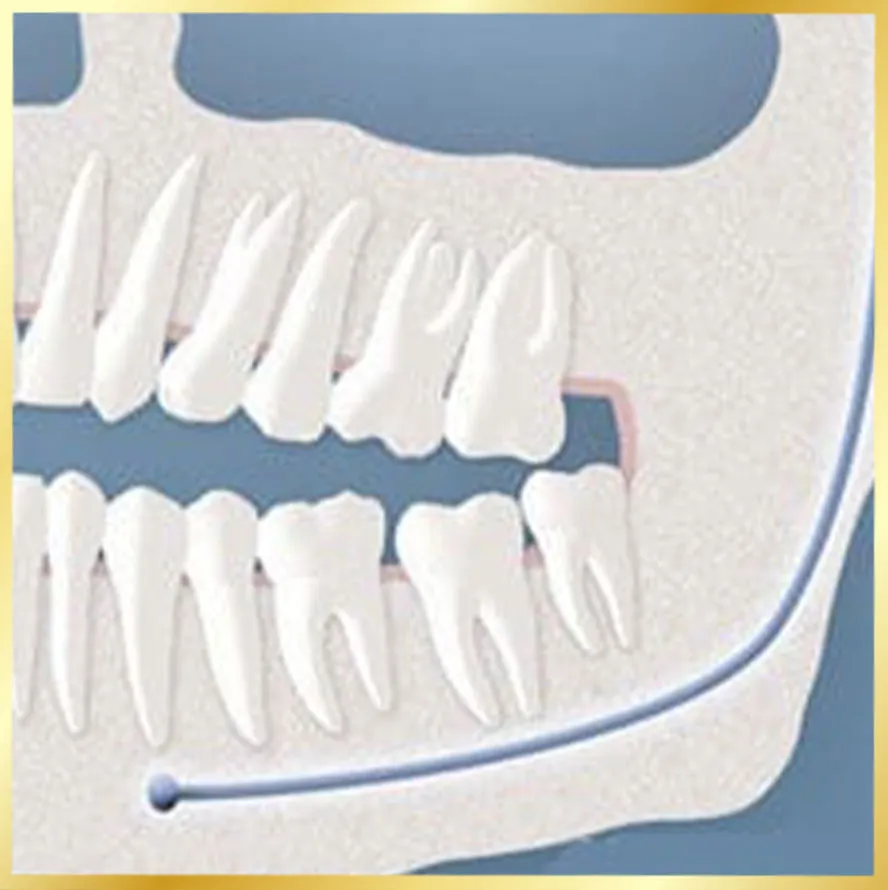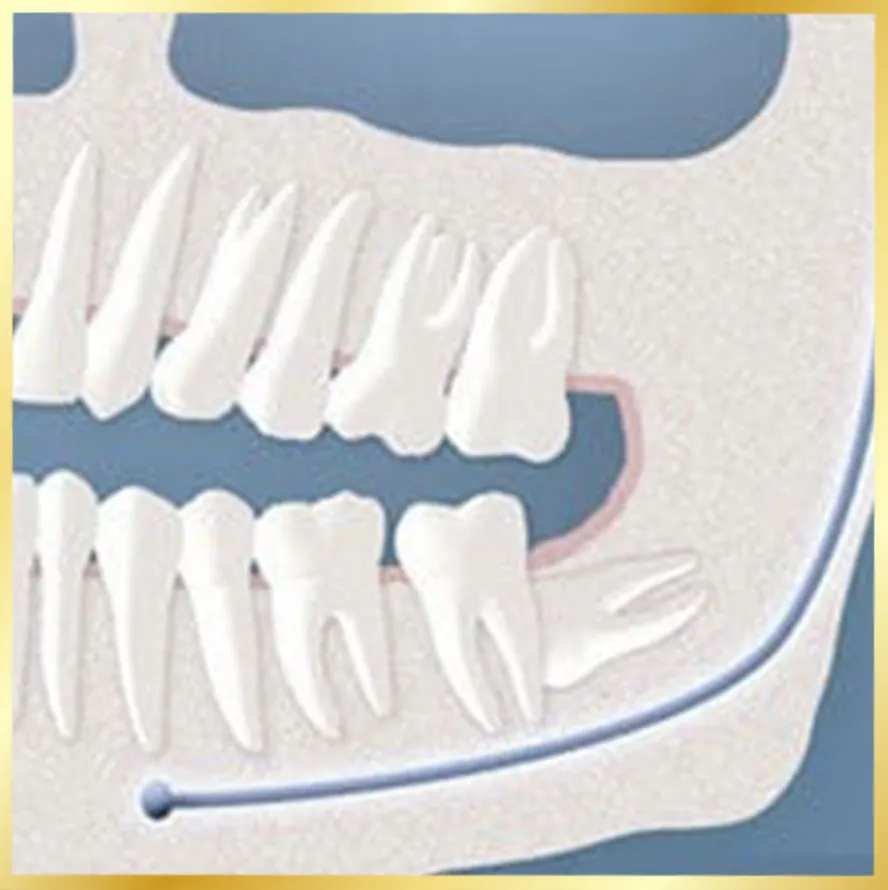
Why Wisdom Teeth Often Become Impacted
Most adults typically have two complete sets of molars by the age of 12, with a third set, known as wisdom teeth, emerging between 16 and 20 years old. Although most people develop 32 permanent adult teeth, their jaws are often too small to accommodate the four wisdom teeth, leading to frequent impactions. Ideally, these teeth would fit seamlessly into the dental arch. Still, due to insufficient space, wisdom teeth can become impacted, resulting in crowding, shifting, and potential damage to nearby teeth, nerves, or roots.
Impacted wisdom teeth can also increase the risk of cysts or infections, posing a threat to overall oral health. Even in the absence of immediate concerns, early detection during their development allows for proactive removal, helping to prevent complications. By addressing wisdom teeth early on, we can protect your oral health and avoid future dental issues.